Where to Live in Costa Rica Based on Your Language: The Best Expat Communities
Introduction
Moving to a new country is exciting—but let’s be honest, it can also be pretty overwhelming. If you’re considering a move to Costa Rica, you’re probably dreaming of palm-lined beaches, vibrant rainforests, and a slower, sunnier pace of life. But one question comes up over and over again when talking to future buyers: Where will I feel at home? And for many people, the answer starts with language.
Not being able to speak the local language can quickly become a challenge. Everyday things—like shopping, talking to a doctor, understanding your property purchase—become more complicated. That’s why so many people look for communities where they can speak their native language, or at least where there’s a decent number of people who do.
Costa Rica is uniquely positioned for this. It’s become a hub for expats from all over the world: Americans and Canadians looking for a peaceful retirement, French families seeking a healthier lifestyle, Germans in love with eco-living, Italians wanting to start anew, Argentinians with digital businesses—you name it.
In this guide, you’ll discover the best areas to live in Costa Rica depending on your native language. We’ll cover English-speaking communities, French, Spanish, German, Italian, and Dutch speakers. You’ll get practical advice, real-life tips, and area-specific suggestions—because speaking your language isn’t just about convenience. It’s about connection.
Let’s help you find a tropical corner of the world where people not only understand what you say… but how you live.
Top Places for English Speakers: A Tropical Haven for Americans and Canadians
If English is your first language, you’re in luck. Costa Rica is home to one of the largest English-speaking expat communities in Central America. Over the years, it’s become a top destination for retirees, families, and digital nomads from the U.S. and Canada. That means there are entire neighborhoods where you can live, shop, socialize, and manage your daily life—entirely in English.
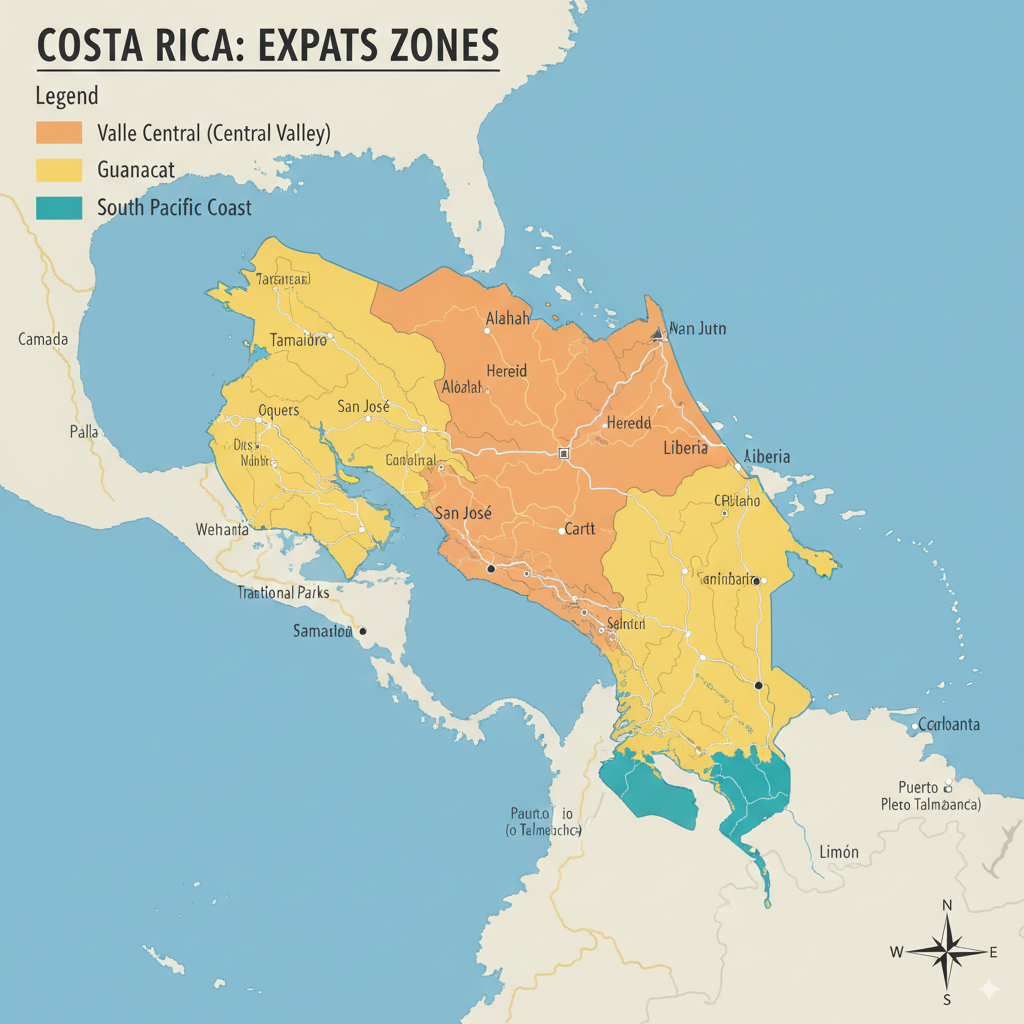
Let’s start with Guanacaste. Towns like Tamarindo, Playa Flamingo, Playa Hermosa, and Nosara are magnets for North Americans. These beach towns have become little hubs of international life, with yoga studios, organic cafes, craft breweries, surf schools, and private clinics where staff speak fluent English. You’ll even find real estate agents, lawyers, and contractors who cater specifically to English-speaking clients.
Another excellent area is the Central Valley, especially Escazú, Santa Ana, Atenas, and parts of Grecia. These areas are close to the capital, offer great healthcare, high-end supermarkets, international schools, and all the modern amenities you’d expect—plus cooler temperatures thanks to the elevation.
English-speaking Facebook groups like “Gringos in Costa Rica” are goldmines for info. People share everything from where to buy maple syrup to how to register your car. You’ll also find networking events, local meetups, and service recommendations.
When it comes to real estate, high demand in English-speaking zones means higher property values and strong resale potential. If you’re thinking long-term or planning to rent out your property, that’s a big plus.
Living in an English-speaking community also makes the transition smoother. You can get things done without a translator, feel confident during emergencies, and build friendships easily. And let’s face it, being able to order a coffee without stumbling through verb conjugations is a nice way to start your new life.
Best Spots for French Speakers: Quiet Charm and Close-Knit Communities
Are you French, Québécois, Belgian—or simply fluent in French? Costa Rica may not seem like the most obvious destination for francophones, but it’s home to a small, tight-knit, and surprisingly active French-speaking community.
If you’re looking for strong connections and a shared cultural background, start with San José and the Central Valley. Neighborhoods like Escazú, Santa Ana, San Pedro, and Rohrmoser have clusters of French-speaking families, professionals, teachers, diplomats, and retirees. One of the central hubs is the Lycée Franco-Costaricien, a French international school in the eastern suburbs. It attracts francophone families and serves as a magnet for community events.
But if you’re drawn to something more alternative, head east to the Caribbean coast, particularly Puerto Viejo de Talamanca. Here you’ll find a mix of French speakers from France, Québec, and the French Caribbean. The vibe is laid-back, tropical, and multicultural. Think vegan cafes, eco-lodges, surf culture, and expats on bicycles. It’s a world away from the big cities, but with a strong sense of community.
There are also online resources like “Francophones au Costa Rica” on Facebook, where people share property listings, job openings, cultural events, and tips on living in Costa Rica as a French speaker.
One big advantage of living in a francophone-friendly area is cultural comfort. Whether it’s a chat over coffee in your native tongue, a French bakery that reminds you of home, or simply someone who gets your references—it all adds up to a smoother transition.
Another bonus? Real estate prices in these French-speaking areas tend to be more affordable than in the high-demand English-speaking beach towns. If you’re looking for charm, community, and good value, these zones could be your ideal starting point.
So if you’re dreaming of life under the palm trees, but with your language and culture intact, the Costa Rican francophone experience might be just what you’re looking for.
Spanish Speakers: Total Integration or Balanced Multiculturalism?
If you’re a native Spanish speaker, moving to Costa Rica might feel like the easiest thing in the world. No language barrier, right? But here’s the thing: Costa Rica might be Spanish-speaking, but not all areas are the same—and where you choose to live will impact your experience in big ways.
For many Latin Americans and Spaniards, the Central Valley is the natural choice. Cities like San José, Heredia, Alajuela, and Cartago are where you’ll find most of the country’s infrastructure: universities, top-tier hospitals, job opportunities, and business networks. Neighborhoods such as La Sabana, Escalante, Rohrmoser, and Curridabat have a nice mix of locals and international residents—perfect if you want a cosmopolitan lifestyle without losing the feel of Latin America.
If you’re from Argentina, Colombia, Spain, or elsewhere in the Spanish-speaking world, you’ll probably want to keep some of your customs alive—your food, your music, your social style. The good news? You’ll find everything from Argentine steakhouses to Colombian cafes and Spanish tapas bars.
Other areas that attract Spanish speakers are beach towns like Jacó, Dominical, Uvita, and Sámara. While these places have lots of tourists, they’re also home to a growing number of Spanish-speaking expats. These areas offer a chilled lifestyle, the ocean at your doorstep, and plenty of opportunities to start a business or work remotely.
The biggest benefit? Knowing the local language gives you an edge. You can negotiate contracts, talk directly with property owners, and handle bureaucracy with ease. And if you’re working with a local real estate agency like Crespo Agency, which speaks your language and understands your cultural needs, you’ll feel right at home.
Whether you’re looking for deep cultural immersion or a Latin American blend, Costa Rica gives you the freedom to choose. It’s all about finding the community that suits your vibe—and then building your best life there.
German, Italian, and Dutch Communities: Hidden but Thriving
If you speak German, Italian, or Dutch, you might be wondering if there’s a place in Costa Rica where you won’t feel completely alone. While these communities are smaller, they’re far from invisible—and in fact, they’re often highly organized and deeply rooted.
Let’s start with German and Swiss-German expats. Many have made their home in Monteverde and San Carlos. Monteverde, in particular, is known for its sustainable living, nature-focused lifestyle, and bilingual schools (some even offer German classes). The town has a long-standing connection to Europe, and many German-speaking families have been here for decades. It’s peaceful, green, and community-driven—ideal for anyone seeking a deeper connection to nature.
Now let’s talk Italians. The town of San Vito, in the southern part of the country, is home to one of the most curious cultural stories in Costa Rica. In the 1950s, it was settled by Italian immigrants who brought with them their language, food, architecture, and customs. Today, you can still hear Italian spoken, enjoy real pasta, and feel the remnants of that cultural heritage.
Dutch speakers are less common but increasingly present in places like Nosara and Santa Teresa. These beach towns have a strong international presence, and many Dutch expats are involved in wellness, permaculture, or tech businesses. Because English is so widely spoken in these areas, Dutch speakers integrate easily without needing to master Spanish right away.
What unites these communities is a focus on values: sustainability, community, and a slower pace of life. They tend to avoid the heavily touristed spots, choosing instead areas that allow for space, self-reliance, and creativity.
Real estate in these regions is often more affordable compared to big-name tourist towns. Plus, you’re more likely to find unique properties with land, natural beauty, and room for projects—perfect for families, eco-entrepreneurs, or those seeking quiet retreats.
If you’re European, want cultural roots, and dream of a life surrounded by nature and purpose, these communities might be your perfect match.
Should You Live in a Language Bubble or Dive Into Local Culture?
This is the million-dollar question for any expat: should you stick with people who speak your language, or should you fully integrate into local Costa Rican life?
Let’s start with the obvious: living in a language bubble makes your transition easier. You can find a doctor, open a bank account, get legal help, or make friends without a language barrier getting in the way. For families with kids or retirees, this comfort level is huge.
But staying too deep in a language bubble can become limiting. You’re in Costa Rica—a country with rich traditions, vibrant local life, and warm-hearted people. If you don’t venture beyond your comfort zone, you risk missing out on the real essence of pura vida.
So, what’s the solution? A gradual integration. Start in an area with people who speak your language. Build your base. Get your home, your network, your basic needs sorted. Then, little by little, start learning Spanish. Join a cooking class, volunteer, chat with your neighbors, take your kids to a local soccer game.
You don’t have to speak perfect Spanish to connect. What matters is the effort—and you’ll be amazed at how open and patient Costa Ricans are when they see you trying.
Also, don’t underestimate the value of having the right support system. A trustworthy agency like Crespo Agency, which speaks your language and understands your journey, can make everything easier—from finding the right home to settling into your new life smoothly.
So in the end, it’s not about choosing one or the other. It’s about balance. Your language and culture are part of you. But letting in new ones? That’s where the magic of expat life really begins.
Conclusion
Moving to Costa Rica is more than a lifestyle change—it’s a new beginning. But to make the most of it, you need more than palm trees and sunsets. You need connection. You need to feel understood. And language plays a massive role in that.
By choosing a community where people speak your language, you give yourself a soft landing. You make friends faster, solve problems easier, and feel a little more at home from day one. Whether you’re English-speaking, French-speaking, Spanish-speaking, German, Italian, or Dutch—there’s a place for you here.
The beauty of Costa Rica is that you can start where you feel comfortable and then grow into the experience. You can live near people who share your culture and slowly integrate into a new one.
And when you’re ready to buy a home here—whether it’s a surf shack, a mountain retreat, or a family home close to schools—don’t go it alone. Work with local experts who understand both the market and your language. Crespo Agency is here to help you make that leap with confidence.
Costa Rica is waiting for you. Now the only question is… where will you call home?


Join The Discussion