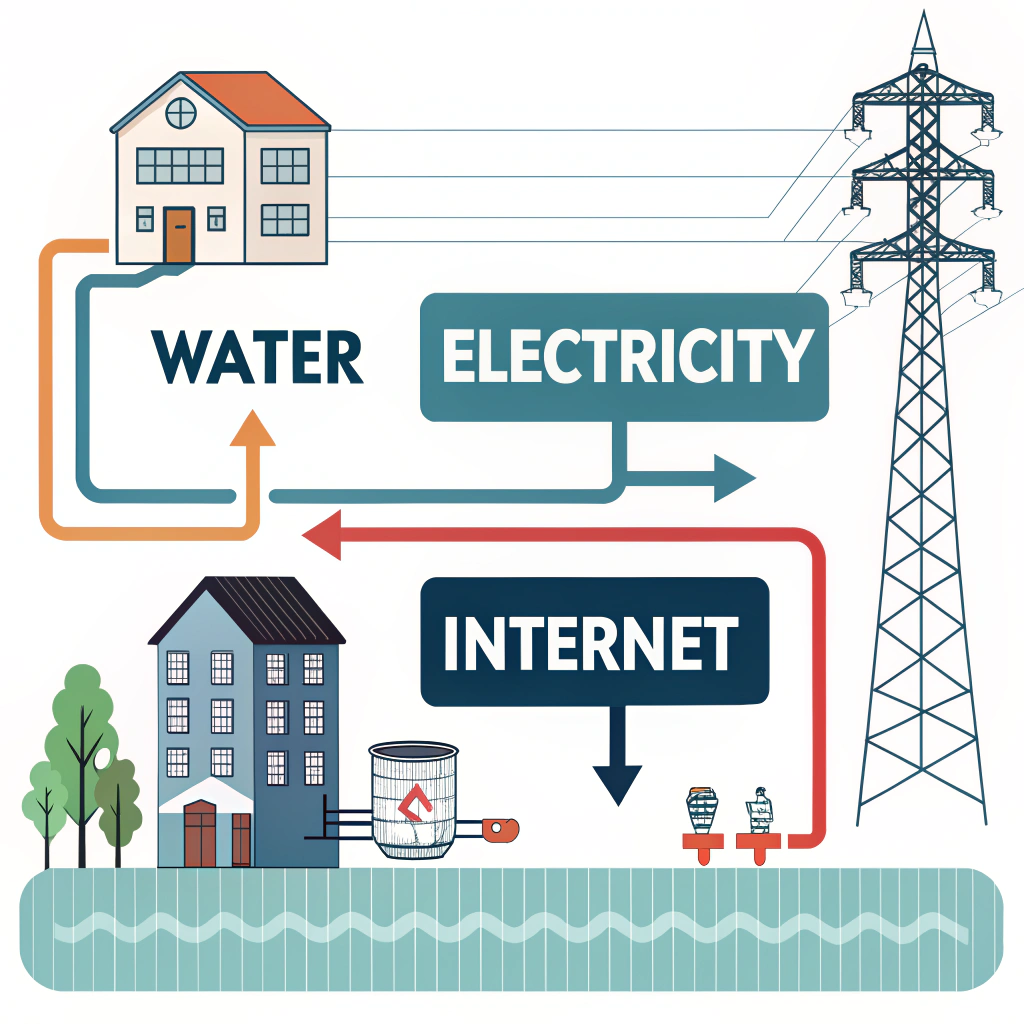
Internet, Water, and Electricity in Costa Rica: What Are the Steps for a New Property or Updating an Existing One?
Introduction
Buying property in Costa Rica is a dream come true for many. Whether you’re looking for a beachfront villa, a jungle retreat, or a modern condo in the Central Valley, there’s one thing you simply can’t ignore: managing the essential utilities. Internet, water, electricity… without them, it’s hard to truly enjoy your new home. And yet, many new property owners underestimate the importance — and sometimes the complexity — of setting up these basic services.
With Costa Rica’s real estate market attracting buyers from the U.S., Europe, and South America, it’s not uncommon for international buyers to feel confused by utility procedures that may differ from what they’re used to. Who do you contact? What documents do you need? Can you sign up for a service if you’re not a legal resident? What are the risks when connecting utilities like electricity or water? All very valid questions that deserve clear, practical answers.
In this article, we’ll walk you through everything you need to know about activating or updating internet, water, and electricity services for a new property — or one you’ve just purchased. Whether you’re a first-time buyer or an experienced investor, this guide will help you avoid headaches and save time.
Ready to dive in? Sit back, relax, and let’s break it all down so your move to Costa Rica goes as smoothly as possible.
Electricity in Costa Rica: Procedures, Providers, and Practical Tips
When buying property in Costa Rica, electricity is priority number one. No power means no fridge, no AC, no internet… not even a morning coffee! The good news? Costa Rica is a global leader in renewable energy — over 98% of its electricity comes from clean sources like hydro, solar, and geothermal. But none of that matters if the power doesn’t reach your property.
Who supplies electricity?
The main provider is ICE (Instituto Costarricense de Electricidad), a government-run company. In certain areas, however, local cooperatives like Coopeguanacaste, JASEC, or CoopeAlfaroRuiz handle the service. Your location determines your provider.
Setting up a new connection
If your property has never had electricity, you’ll need to request a new service installation. Here’s what you’ll typically need:
A copy of your passport or local ID (cédula)
Proof of ownership (title deed or purchase contract)
A signed request letter
The cadastral plan (map of the property)
Possibly, an electrical plan approved by a licensed engineer
Installation timelines vary but typically take 1–3 weeks. If there’s no nearby infrastructure, the wait could stretch to months, with added costs for running new lines.
Updating an existing account
If electricity is already active, transferring the contract to your name is much easier. Just:
Visit the provider’s local office with your ID and proof of ownership
Sometimes the seller must be present
Check for unpaid bills before making the switch
Tip: Handle this right after closing the purchase to avoid future issues or liabilities.
Managing from abroad
ICE and other providers offer online account management and bill payment, which is super handy if you’re not living in Costa Rica full-time. You can also appoint a legal representative locally to handle services on your behalf.
Water Services: What You Need to Know for Safe and Reliable Access
Water is a basic human right — but getting access to it can be one of the more confusing steps when buying property in Costa Rica. How do you ensure your new home has clean, reliable water? What if there’s no existing connection? Let’s break it down.
Who provides water?
The national provider is AyA (Instituto Costarricense de Acueductos y Alcantarillados). In rural areas, however, many communities rely on ASADAs — local water boards run by community members.
These ASADAs can be very efficient… or not. Service quality depends on the area and the board’s management. If your property is in a remote region, always ask around or investigate the ASADA’s reputation before buying.
Requesting a new connection
If your property is not yet connected, you’ll usually need:
A copy of your passport
Property title or purchase document
Cadastral plan
Exact address
In some cases, a feasibility study to assess service availability
Timelines can range from a few days to several months, especially if new infrastructure is needed. Some areas, even residential zones, may not yet have public water access. In these cases, you may need to drill a well or install a water tank system, which can be expensive.
Transferring an existing account
If water is already hooked up, you’ll just need to transfer the account. Bring your purchase deed and ID. Also:
Make sure all past bills are paid
Some ASADAs require a security deposit, refundable when you cancel service
Is the water safe to drink?
In most urban and tourist areas, yes. However, in rural zones, it’s often recommended to use filters or stick to bottled water. If unsure, have the water tested by a local lab.
Pro tip
Get to know your local provider. A good relationship can help you get faster repairs, receive alerts about service disruptions, and simplify remote management.
Internet in Costa Rica: Providers, Options, and What to Expect
Let’s be honest — a house without internet is not really a home anymore. Whether you work remotely, stream Netflix, or just want to keep in touch with family, solid internet is a must. The good news? It’s getting better and better in Costa Rica. The bad news? It’s still a bit tricky in some places.
Major providers
The main internet providers are:
Kolbi (part of ICE)
Tigo
Claro
Cabletica
Each has its pros and cons. Kolbi is widely available but slower in rural areas. Tigo has great speeds in urban zones. Cabletica offers excellent fiber plans in the Central Valley.
Fiber, ADSL, or satellite?
In urban or semi-urban areas, fiber optic is increasingly available.
In remote or coastal areas, you might be stuck with ADSL or even satellite internet like Starlink.
Before buying, ask your realtor or seller what internet is available at the property. Poor connectivity can be a real dealbreaker — especially if you work online.
How to get connected
Go to a provider’s office with:
Your passport
Proof of property ownership or lease
The full address
Some providers require a local bank account for automatic payments, while others accept online card payments.
If internet is already installed?
You can either transfer the contract or cancel and start a new one. Make sure the router/modem belongs to the provider or seller and there are no unpaid fees.
Good news
Costa Rican internet plans are fairly affordable, with fiber packages ranging from $30 to $60/month depending on speed. And quality has improved a lot in recent years, especially in expat-heavy areas.
The Crespo Agency tip
Not sure what coverage is available or how to get started? The team at Crespo Agency can connect you with the best providers for your location, help you with paperwork, and even handle the entire setup process for you. Total peace of mind.
What If the Property Doesn’t Have Utilities Yet?
Picture this: you’ve found the perfect plot of land in a dreamy part of Costa Rica — but there’s no water, no power, no internet. Should you walk away? Not necessarily. With the right planning, it can still be a great investment.
Step 1: Do your research
Before signing anything, check:
Are there power lines nearby?
Is there public water access in the area?
What’s the internet coverage like?
Hire a local engineer or attorney to do a feasibility check. It’s worth every penny to avoid nasty surprises.
Step 2: Budget realistically
If the property lacks services, you might need to:
Pay to extend power lines
Drill a well or install a water tank system
Use solar panels as a backup
Go with satellite internet (Starlink is popular for this)
All of this can add thousands of dollars to your initial costs — so factor it into your budget early.
Step 3: Be patient
Securing permits, dealing with providers, and building infrastructure can take months. If you plan to live on-site right away, prepare for delays and build in a time cushion.
Step 4: Temporary solutions
Many new property owners start with hybrid solutions:
A generator for electricity
Water delivery trucks or storage tanks
4G mobile internet or satellite service
These temporary fixes can help you live or rent the property while waiting for full utility connections.
Bottom line
Buying “off-grid” in Costa Rica can be a smart move — as long as you’re realistic, informed, and prepared. A little planning goes a long way.
Common Mistakes to Avoid — and Smart Moves to Make
Even when the paperwork looks simple, utility setups in Costa Rica can trip up new property owners. Here are the biggest mistakes people make — and how to avoid them.
Mistake #1: Not checking for unpaid bills
If the previous owner didn’t pay their utility bills, you might inherit the debt.
Smart move: Request a final balance statement from each provider before transferring service.
Mistake #2: Leaving the contract in the seller’s name
Seems harmless, right? But if a service isn’t in your name, you have no legal rights over it.
Smart move: Transfer all contracts to your name immediately after closing the deal.
Mistake #3: Underestimating timelines
Things move slower in Costa Rica. It’s not a stereotype — it’s a reality. Some requests can take weeks or even months.
Smart move: Start early and give yourself plenty of buffer time.
Mistake #4: Going it alone
If you don’t speak Spanish or understand the bureaucracy, the process can be overwhelming.
Smart move: Work with a reliable local agency like Crespo Agency or a seasoned Costa Rican lawyer to guide you.
Mistake #5: Picking a provider at random
Not all providers offer the same quality — especially in rural zones. Choosing blindly can mean slow speeds, poor service, and constant outages.
Smart move: Ask neighbors or your real estate agent for recommendations based on real experience.
Conclusion
Buying real estate in Costa Rica is a thrilling adventure, but to fully enjoy it, you need to make sure your essential services — electricity, water, and internet — are in place. Whether you’re hooking up for the first time or transferring existing services, each step requires some planning, patience, and the right information.
Understanding how the process works, knowing your local providers, and anticipating potential issues will save you time and frustration. Keep in mind that every region in Costa Rica is different — and so are the timelines.
Surround yourself with professionals, ask the right questions early, and don’t leave things to chance. That’s how you make sure your new home is not just beautiful, but also livable and fully functional. And if you need a hand, remember that agencies like Crespo Agency specialize in helping international buyers every step of the way.
So… ready to enjoy your Costa Rican home with fast Wi-Fi, clean water, and reliable power?



Join The Discussion