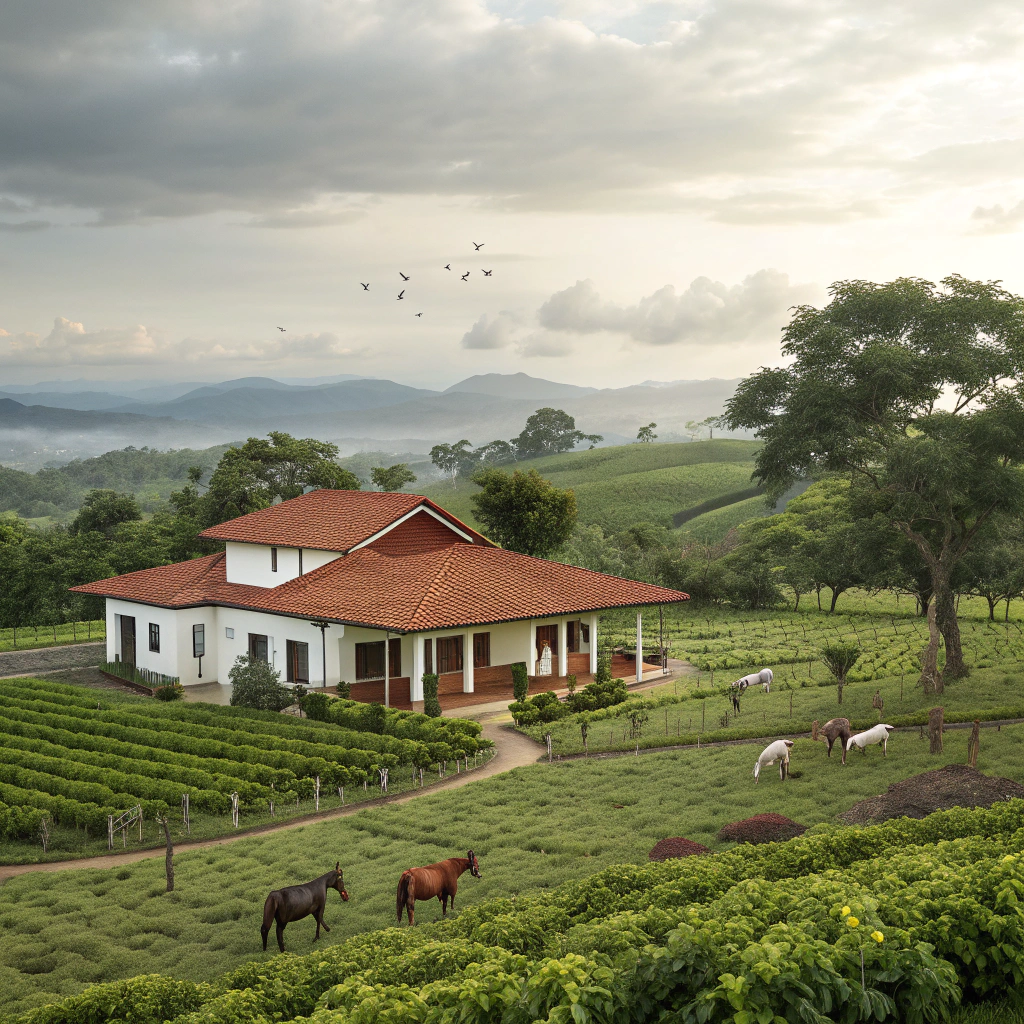
Buying, Developing, and Selling Products from Your Finca in Costa Rica
Introduction
Buying a finca in Costa Rica is more than a real estate investment — it’s a lifestyle choice. It’s about reconnecting with nature, creating a sustainable project, and enjoying the freedom that comes from owning productive land in one of the most beautiful and stable countries in Latin America. Every year, more and more buyers from the U.S., Europe, and South America are drawn to the Costa Rican countryside. The promise is appealing: fertile soil, a tropical climate, and a welcoming culture that encourages ecological entrepreneurship.
Costa Rica is internationally recognized for its commitment to environmental sustainability and quality of life. The country’s rich biodiversity and strong agricultural tradition create the perfect conditions for developing productive fincas. Whether you want to grow coffee, cacao, tropical fruits, honey, medicinal plants, or start an eco-friendly agritourism project, the opportunities are endless. Local and international markets for sustainable and organic products are growing rapidly.
However, turning a finca into a profitable venture requires more than enthusiasm. You need knowledge, planning, and a clear business strategy. It’s about understanding the land, the climate, and the legal framework, as well as how to position your products for success.
In this complete guide, we’ll walk you through every step — from choosing and purchasing the right property to developing your finca sustainably and marketing your products effectively.
If you dream of living from the land, combining profitability with purpose, and contributing to Costa Rica’s green future, this article will show you how to make it happen.
(300 words exactly)
Choosing and Buying the Right Finca in Costa Rica
Before you start producing or building, you need to make the right purchase. The Costa Rican rural real estate market is diverse and full of opportunities — but it also requires caution and preparation. Choosing the right finca depends on your goals, budget, and long-term vision.
First, define your purpose. Are you looking for a finca to live self-sufficiently, to create an agricultural business, or as a long-term investment? Your answer determines everything: the size, location, and type of soil you’ll need. For example, coffee and cacao thrive at elevations between 800 and 1,500 meters, while tropical fruit plantations perform better in coastal, humid zones.
Location is key. The Central Valley offers a mild climate, solid infrastructure, and proximity to the capital. The Pacific regions (Central and South) feature lush landscapes and affordable prices, while Guanacaste combines tourism, sun, and large tracts of land. Prices vary widely — from around $150,000 for mid-sized properties to several million dollars for premium estates with established operations.
Before buying, always verify the property title (“escritura pública”) with a reputable local attorney. Ensure access to water, electricity, and good roads. Water rights are particularly important in Costa Rica — you must confirm they are legally registered.
Visit multiple fincas before making a decision. Speak with neighbors, observe the land, and learn about the local community. Rural Costa Rica is welcoming, and building relationships can be as valuable as the land itself. Buying a finca here isn’t just about owning property — it’s about becoming part of a living, breathing community that values respect, cooperation, and nature.
Developing Your Finca: Planning, Producing, and Innovating
Once you own your finca, the real challenge begins: developing it effectively. Success depends on clear planning, sustainable practices, and smart innovation.
Start with a land assessment. What type of soil do you have? How much rainfall does your region receive? What are the sun exposure and slope conditions? A good agroecological study helps you select the right crops and avoid costly mistakes. For instance, avocado trees won’t thrive in overly humid soils prone to fungus.
Next, design a development plan. Think of your finca as a small ecosystem and business at once. Divide your land into production areas, housing, conservation zones, and possibly sections for diversification — such as livestock, on-site product processing, or ecotourism. Agroforestry — mixing trees, crops, and biodiversity — is one of the most sustainable and profitable models in Costa Rica.
Innovation plays a key role. Solar-powered irrigation systems, composting technologies, and mobile apps for crop monitoring can greatly increase efficiency. Additionally, obtaining organic certification (“orgánico certificado”) can add significant value to your products, especially for export markets.
Don’t overlook training and education. Institutions like the INA (Instituto Nacional de Aprendizaje) offer courses in permaculture, organic farming, and small-scale production management. Connecting with local experts and cooperatives can accelerate your learning curve.
Developing your finca in Costa Rica is about more than growing crops. It’s about cultivating balance — between nature and business, between sustainability and profit. And when done right, the land will reward your care.
Creating Value: Transforming and Selling Your Products
Now that your finca is productive, how do you turn that production into profit? The answer lies in value creation — not just selling raw goods but transforming them into marketable, high-value products.
Think transformation: instead of selling raw coffee, roast it locally and build your own brand. Instead of selling plain honey, infuse it with ginger or turmeric. Make tropical jams, herbal teas, or handmade soaps with your farm’s resources. Costa Rican consumers — and especially tourists — love artisanal, authentic, and eco-friendly products.
This is where strategic partners like Crespo Agency come in. Specializing in real estate and sustainable project marketing, Crespo Agency helps finca owners build brand identity, develop online presence, and create tailored sales strategies for international audiences. Because producing something great isn’t enough — you also need to tell its story and connect emotionally with your buyers.
Choose your sales channels wisely. You can sell locally at farmers’ markets, hotels, and eco-resorts, or online through your own website or international platforms. Costa Rica benefits from trade agreements with the U.S., the European Union, and several Latin American countries — a huge advantage for exporting certified products.
Finally, remember that modern buyers want stories, not just goods. Share your journey, your environmental values, your challenges, and your successes. People want to buy from brands with purpose. When you communicate authentically, your finca becomes more than a business — it becomes a mission.
Making Your Finca Profitable: Business Models and Strategies
There are many ways to make a finca profitable in Costa Rica. The key is to choose the model that aligns with your vision, resources, and lifestyle goals.
The most traditional approach is direct agricultural sales — selling your produce locally or to distributors. It’s simple but often has thin margins, especially in the early years. To increase profitability, many finca owners focus on vertical integration: transforming raw materials into finished goods (e.g., oils, chocolates, or natural cosmetics) or selling directly online. The rise of rural e-commerce has made this strategy increasingly viable.
Another promising path is rural tourism. Many finca owners are turning their properties into destinations — offering farm stays, workshops, yoga retreats, or farm-to-table experiences. Visitors from around the world are willing to pay for authentic, eco-friendly experiences that let them connect with nature and local culture. Combining tourism with agriculture can significantly boost income while promoting your brand.
You can also explore collaborative investment models. Some finca owners partner with investors who finance equipment or land improvements in exchange for a share of profits. This reduces financial risk and accelerates development.
The secret to profitability is flexibility. Markets evolve, weather changes, and personal goals shift — your finca should adapt accordingly. By combining production, creativity, and community, your finca can become a model of sustainability and long-term financial success.
Managing and Growing Your Project Over Time
Buying and developing your finca is only the beginning. The real achievement is managing it successfully over the long term. Sustainability, teamwork, and innovation are key to lasting success.
Start by building a reliable team. Even small fincas require support — farmhands, technicians, artisans, or business partners. Investing in trustworthy people pays off. In Costa Rica, personal relationships and trust are the foundation of any successful project.
Next, streamline your operations. Automate what you can — irrigation, inventory, customer communication — using affordable technology. Digital tools help you stay organized and focused on strategy rather than daily chaos.
Prioritize environmental responsibility. Costa Rica is a global leader in renewable energy and sustainability. Implement green practices: solar panels, composting systems, water conservation, and reforestation. Not only will you protect the environment, but you’ll also strengthen your brand’s value and attract conscious consumers.
Finally, focus on community and networking. Join local agricultural associations, attend regional fairs, and collaborate with other finca owners. These connections can open new markets, share resources, and build resilience. In Costa Rica, community is everything — a connected finca is a thriving finca.
If you manage your finca with long-term vision and respect for both nature and people, your project will grow beyond financial gain — it will become a legacy.
Conclusion
Buying, developing, and selling the products of your finca in Costa Rica is much more than a financial venture — it’s a journey toward balance, independence, and fulfillment. Surrounded by nature and driven by sustainability, this lifestyle combines purpose with profit.
Success begins with smart purchasing decisions, continues with thoughtful development, and culminates in creative marketing. Costa Rica’s unique environment offers fertile soil not only for crops but for ideas, innovation, and entrepreneurship. Those who respect the land and embrace its rhythm find that it rewards them generously.
Whether you’re seeking a new lifestyle, a sustainable business, or a long-term investment, your finca can become a source of prosperity and personal growth. Costa Rica welcomes dreamers who act, who cultivate with purpose, and who believe that living from the land can also mean living well.
Here, your finca can become more than a property — it can become your legacy.


Join The Discussion