 by
Security of Property and People in Costa Rica: What You Need to Know Before You Invest
Introduction
Buying property in Costa Rica is exciting, inspiring, and often life changing. The beaches are stunning, the democracy is stable, and the lifestyle feels refreshingly balanced. But before you wire funds or sign contracts, one question usually rises to the top. Is it truly safe for you and your family?
You are not overreacting by thinking about security. You are being responsible. Costa Rica is one of the most stable countries in Central America, yet stability does not mean zero risk. Like anywhere else, neighborhoods differ, opportunities attract attention, and preparation always matters especially when you invest abroad with confidence.
Most security issues can be reduced with planning. You do not need fear; you need awareness. Whether you prefer a gated condominium or an independent villa surrounded by jungle, each option carries different responsibilities. Understanding those differences protects both your property and your peace of mind from the beginning forward.
In this article, we will speak openly. No exaggeration, no denial. We will explore how to secure your investment, how to behave wisely in different social environments, and what practical steps actually work. You deserve clear information before making a serious financial commitment overseas that affects your future lifestyle decisions.
We will also address uncomfortable realities. Some areas are wealthier than others. Economic gaps exist, and displaying wealth carelessly can create unnecessary exposure. That does not mean you should live nervously; it means you should live intelligently and respectfully within the context around you every single day you reside there.
By the end, you will understand how to balance opportunity with caution. Costa Rica can offer remarkable safety compared with many major cities worldwide. But your experience depends on the choices you make, the professionals you trust, and the habits you develop from day one as a property owner here.
Condo Living or Isolated Home: Two Different Security Strategies
When you invest in Costa Rica, the type of property you choose directly affects your security strategy. A condominium inside a gated community offers a very different reality than a standalone home in a more secluded setting. Both can be safe, but they require different levels of personal involvement and planning from you.
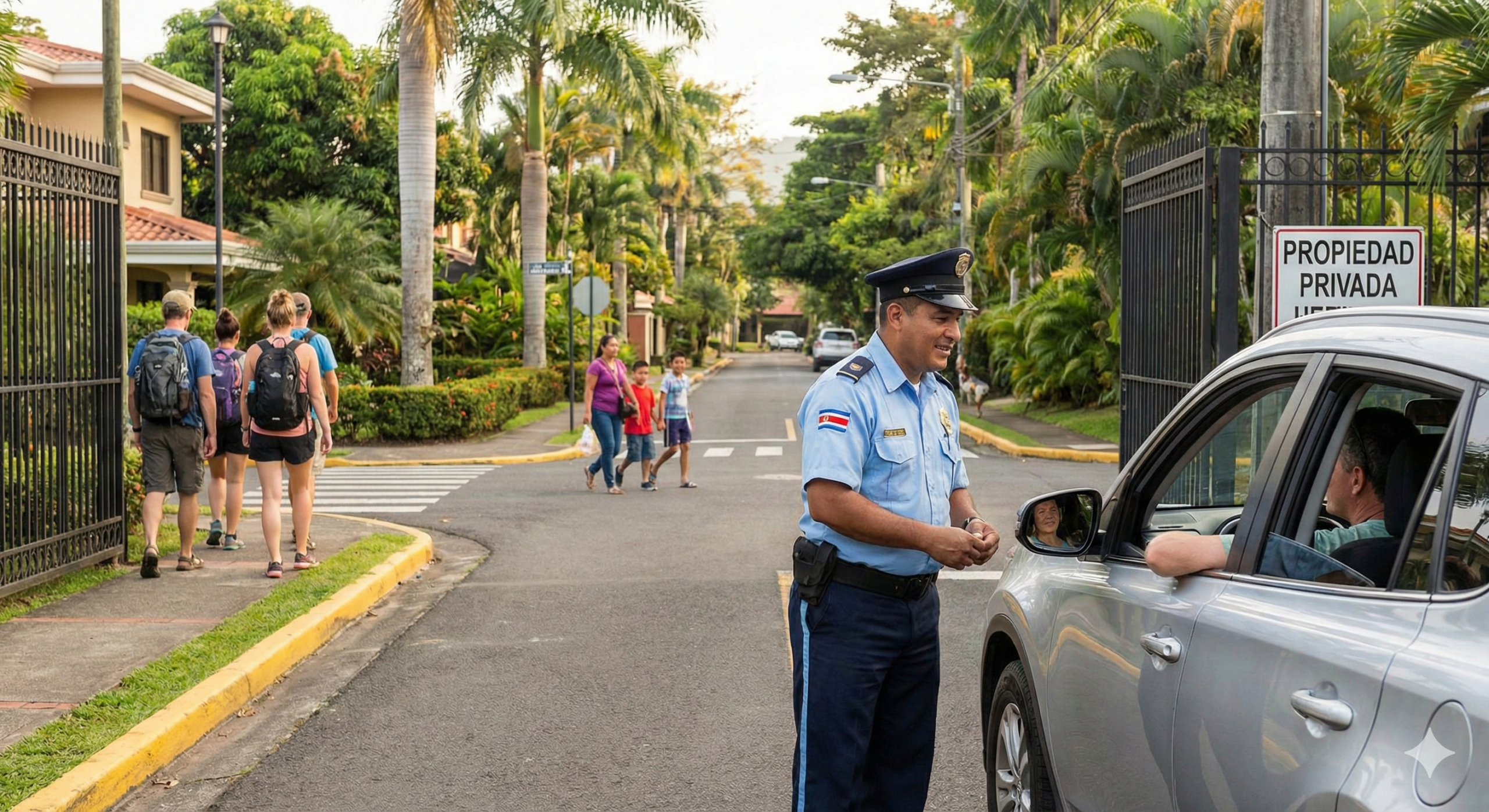
Gated condominiums typically provide controlled access, security guards, surveillance cameras, perimeter fencing, and established community rules. That structure creates a shared layer of protection. If you travel frequently or split your time between countries, knowing someone monitors the entrance twenty four hours a day brings enormous peace of mind.
However, community security does not replace personal responsibility. You still need quality door locks, alarm systems, and awareness. A common mistake among foreign buyers is becoming too relaxed because “it’s a gated community.” Leaving sliding doors unlocked or sharing entry codes casually weakens the entire security chain.
On the other hand, an independent home offers privacy, space, and often breathtaking views. You might enjoy ocean panoramas or lush jungle surroundings without immediate neighbors. That independence is attractive, but it also means security depends more heavily on your individual preparation and consistent maintenance practices.
If your home is isolated, perimeter fencing becomes essential. Motion activated lighting discourages unwanted visitors. A monitored alarm connected to a local response company is highly recommended. Cameras with remote mobile access allow you to check your property from anywhere in the world instantly.
Another important factor is vacancy. Many international owners leave their Costa Rican homes empty for months. An unattended property is more vulnerable. Hiring a reliable property manager, caretaker, or trusted neighbor to conduct regular inspections significantly reduces risks and provides early detection of potential problems.
So which option is better? It depends on your lifestyle. Do you prioritize convenience and shared infrastructure, or independence and privacy? There is no universal answer. What matters is aligning your security measures with the realities of your chosen environment instead of assuming one model automatically guarantees protection.
Essential Measures to Protect Your Investment
Let’s get practical. If you purchase property in Costa Rica, certain security measures should be implemented immediately. These are not extreme precautions. They are standard best practices for responsible international property ownership and will significantly reduce potential exposure to opportunistic crime.
Start with a professionally monitored alarm system. Choose a reputable local security company that offers rapid response services. Ensure your system includes door sensors, window contacts, motion detectors, and a panic feature. The monthly monitoring cost is modest compared to the financial value of your real estate investment.
Install exterior and interior surveillance cameras with remote access. Modern systems allow you to view live footage from your smartphone at any time. Position cameras at primary entrances, garages, secondary access points, and vulnerable perimeter areas. Visible cameras alone often discourage individuals seeking easy targets.
Do not underestimate lighting. Dark corners create opportunity. Motion activated floodlights around entryways and along property boundaries are simple yet extremely effective. Criminal activity often depends on concealment. Eliminating shadowed spaces reduces that advantage and increases your overall defensive posture significantly.
Discretion also plays a major role. Avoid posting real time vacation updates on social media announcing extended absences. Do not routinely showcase expensive watches, jewelry, or electronics in public settings. Security today includes digital behavior. Oversharing travel plans unintentionally signals when a property might be unattended.
If you hire domestic staff, gardeners, or maintenance personnel, verify references carefully. Costa Rica has many honest, hardworking professionals, but due diligence protects you. Work with established agencies or obtain recommendations from trusted neighbors and property advisors before granting regular access to your home.
Insurance is another critical component. Secure a comprehensive homeowners policy that covers theft, structural damage, liability, and natural events. International buyers sometimes underestimate local risk factors. A tailored insurance plan provides financial protection even if an unexpected situation occurs despite preventative efforts.
Finally, integrate into your community. Know your neighbors. Exchange contact information. Participate occasionally in local meetings. Informal networks often serve as early warning systems. When neighbors recognize unusual activity, they are more likely to alert you or local authorities promptly and responsibly.
Wealthy Areas, Modest Neighborhoods, and Common Mistakes
Security discussions must include social context. Not all neighborhoods in Costa Rica share identical economic realities. Some communities feature luxury homes, private security, and strong infrastructure. Others reflect more modest income levels. Understanding these differences helps you behave appropriately and minimize unnecessary exposure.
Affluent areas often provide paved roads, reliable lighting, private patrols, and organized homeowner associations. These features create a structured environment that supports property protection. However, concentration of wealth can attract opportunistic criminals who specifically target high value residences when preventative measures are weak.
In contrast, modest neighborhoods may lack extensive private security infrastructure. Residents typically know each other well and maintain informal community awareness. Problems sometimes arise not from organized crime, but from visible economic disparity that can create temptation if wealth is displayed carelessly.
Ask yourself a simple question. Do you need to visibly demonstrate financial success in everyday interactions? Driving luxury vehicles, wearing expensive accessories in vulnerable settings, or discussing property values openly with strangers can unintentionally increase risk. Discretion is not fear; it is strategic awareness.
One common mistake among foreign buyers is assuming their home country habits transfer seamlessly. Cultural adaptation matters. Observing local norms, dressing appropriately for the environment, and maintaining humility foster respect and reduce friction. Integration strengthens safety more effectively than isolation behind walls.
Micro location analysis is equally important. Even within the same city, security conditions can change from one street to the next. Traffic flow, lighting, neighboring businesses, and proximity to main roads all influence exposure. Professional local guidance helps you evaluate these subtle but critical differences accurately.
Working with experienced real estate professionals who understand regional dynamics allows you to choose locations aligned with your comfort level. Firms such as Crespo Agency, with deep market knowledge, can explain how specific communities function socially and economically before you commit significant capital.
Security is not purely technological. It is behavioral, social, and environmental. When you combine intelligent property selection with respectful conduct and preventative systems, you create a balanced strategy that supports long term stability and confident living in Costa Rica.
Personal Safety and Daily Living with Confidence
Protecting your property is essential, but your personal safety matters just as much. The reassuring reality is that Costa Rica generally maintains lower violent crime rates than many countries in the region. Most incidents involving foreigners relate to opportunistic theft rather than targeted aggression.
What does that mean for you? Basic precautions usually suffice. Avoid leaving valuables visible inside vehicles. Lock doors consistently. Use secure parking facilities when available. These small habits dramatically reduce the likelihood of becoming an easy target for petty crime.
When withdrawing cash, choose reputable banking locations and avoid carrying excessive amounts. Consider using electronic payments whenever possible. Financial discretion is a universal safety principle, particularly in tourist heavy areas where outsiders are more easily identified by appearance or language.
At night, rely on licensed taxis or recognized transportation applications. In popular coastal or urban districts, police presence is often visible, yet caution remains wise. Staying aware of your surroundings and avoiding poorly lit isolated areas after dark strengthens your overall security profile.
If you relocate with family members, communicate expectations clearly. Teach children not to display expensive electronics in public carelessly. Encourage situational awareness without creating anxiety. Security should feel like routine responsibility, not constant stress or fear driven restriction.
Long term expatriates frequently report years of peaceful living in Costa Rica without major incidents. Their approach is consistent: maintain low profile visibility, respect local customs, build community relationships, and apply reasonable precautions similar to those used in major global cities.
It is also important to maintain perspective. Media reports can amplify isolated events, creating distorted impressions. Statistically, numerous metropolitan areas in North America and Europe experience higher crime rates than many Costa Rican regions popular with international property owners.
Ultimately, balance defines successful relocation. Neither paranoia nor overconfidence serves you well. Thoughtful preparation, informed property selection, consistent habits, and cultural respect combine to create an environment where you can fully enjoy Costa Rica’s natural beauty and investment potential safely.
Conclusion
Investing in Costa Rica can be one of the most rewarding financial and lifestyle decisions you ever make. The country offers political stability, natural beauty, and strong appeal to international buyers. Yet security should never be an afterthought in your purchasing strategy.
The encouraging truth is that most risks are manageable. By selecting the right neighborhood, installing appropriate security systems, maintaining discretion, and adapting respectfully to local culture, you significantly reduce potential exposure. Preparation transforms uncertainty into structured confidence and long term peace of mind.
Whether you choose a guarded condominium or a private hillside villa, your experience depends largely on the systems you install and the habits you practice. Intelligent prevention does not limit enjoyment; it protects it.
Costa Rica is not a place to fear. It is a place to approach thoughtfully. When you combine awareness, professional guidance, and practical safeguards, you create a secure foundation for both your property and your family.
Security is not an obstacle to your dream. It is the structure that allows that dream to thrive responsibly and sustainably.