Introduction
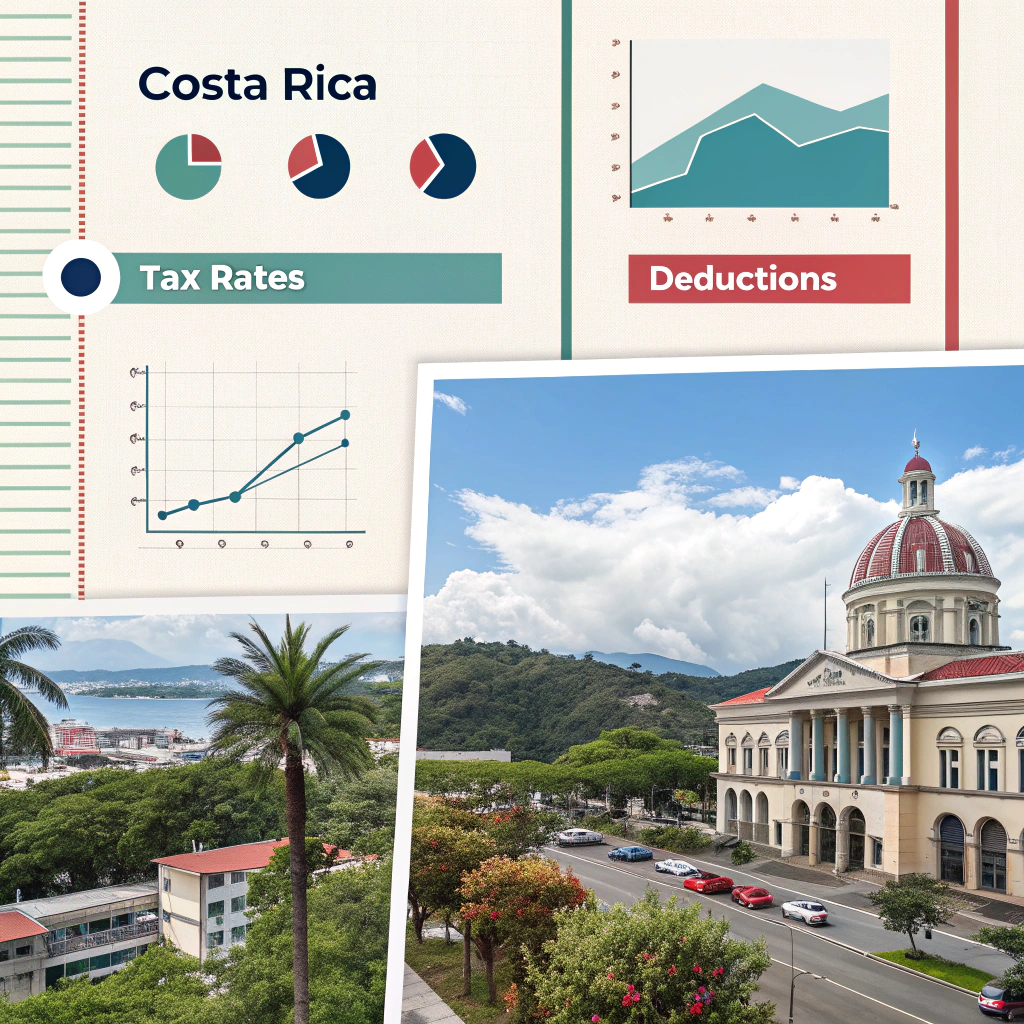
When considering moving to or investing in Costa Rica, taxes are often the first big question that comes to mind. Who hasn’t heard both dreamy and worrying stories about local taxes, filing obligations, or even double taxation? Whether you’re a future resident, an investor, or simply curious about how the Costa Rican tax system works, this article is here to give you clear, straightforward answers.
Every year, Costa Rica attracts numerous foreigners, drawn by its beaches, lush nature, and relaxed lifestyle. But beyond the dream, it’s essential to understand the tax landscape that awaits you, especially if you’re planning to purchase real estate or settle permanently. What are your tax obligations as a resident? Do non-residents pay the same taxes? What are the common pitfalls to avoid? And above all, how can you legally optimize your situation to make the most of your Costa Rican experience?
In this guide, I’ll walk you through the ins and outs of Costa Rican taxes for foreigners, using simple, accessible language. We’ll cover tax residency, income taxes, real estate taxes, the benefits and risks of the system, plus practical tips to avoid nasty surprises. Rest assured: Costa Rican taxes, though sometimes seen as complex, can be quite straightforward with the right information and guidance.
You’ll see, it’s not as scary as it sounds! Get comfortable and let me guide you through this tax journey, whether you’re about to make the leap or just exploring your options. By the end, you’ll have all the tools you need to make smart, informed, and compliant decisions. Ready to demystify Costa Rican taxation? Let’s dive in!
Understanding Tax Residency in Costa Rica: Who It Applies to and Why It Matters
Before you even think about filing taxes or paying anything to the Costa Rican tax office, the first step is to figure out whether you’re considered a tax resident or a non-resident. This is crucial because it determines all your obligations, rights, and even your opportunities to optimize taxes. So, how does Costa Rica define tax residency?
Unlike some countries that rely solely on days spent in-country (like the “over 183 days per year” rule), Costa Rica uses a mixed approach, considering both physical presence and economic ties. In short, if you live, work, or invest here, there’s a good chance you’ll be seen as a tax resident. But be careful—it’s not automatic!
For example, an expat who lives in Costa Rica for more than 183 days a year is usually considered a tax resident, even without formal immigration status. However, a non-resident who only visits a few weeks per year or whose main life remains abroad will be treated as a non-resident for tax purposes. Why does this matter so much? Because residents and non-residents are taxed differently!
As a tax resident, you are only taxed on your Costa Rican-sourced income (the country does not tax worldwide income, unlike the U.S. or France). That’s already some good news! Non-residents, on the other hand, are only taxed on local income—but usually at higher fixed rates and without access to the deductions or exemptions offered to residents.
This starting point is fundamental to avoid unpleasant surprises: before doing anything, check your tax residency status. If you’re unsure, local tax advisors or specialized agencies can help you clarify your situation. Don’t wait until the tax office comes knocking to figure things out!
And why should you even care? Simple: knowing your status helps you plan ahead, avoid penalties, and make smarter decisions about your investments or move. It’s the foundation of a smooth, stress-free relocation. So, don’t skip this critical step.
Income Taxes for Foreigners: What You Need to Know
Let’s now get to the heart of the matter: income taxes. This is probably the top question foreigners have when thinking about moving to or investing in Costa Rica. You hear all kinds of things, so let’s set the record straight.
First, you should know that Costa Rica applies the principle of territorial taxation: only income earned within Costa Rica is subject to tax here. Phew! That means your foreign pensions, rental income, or salaries earned abroad are generally not taxed by the Costa Rican government.
But what exactly counts as “Costa Rican-sourced income”? Simple: any income generated from local activities—whether it’s employment, business income, rental income from local properties, or dividends from Costa Rican companies.
For tax residents, income tax is progressive. As of 2025, the first 900,000 CRC (Costa Rican colones) of annual income are tax-exempt, and then progressive rates apply up to 25%. The system offers useful deductions, including family expenses, medical costs, mortgage interest, and more. These allowances make the system quite flexible and help reduce the tax burden if you plan ahead.
For non-residents, the rules are stricter: they face withholding taxes on Costa Rican income. For example, rental income paid to a non-resident is taxed at 15%, dividends at 15%, interest at 8% or 15%, and professional services at 25%. There are no deductions or exemptions—taxes are simply withheld at the source, and that’s it.
A common question among newcomers is: “If I have an offshore company or foreign income, am I affected?” Generally, no, as long as the activity isn’t performed in Costa Rica. But be warned: the Costa Rican tax office has been tightening controls, especially with expats investing in real estate or launching local businesses.
If you’re retired, taxes are often straightforward: foreign pensions are not taxed locally, but if you teach, consult, or rent out a local property, that income is taxable here.
My tip? Keep your records clean, document the origin of your income, and don’t hesitate to consult a local tax expert. It’ll save you headaches and help you optimize your declarations. Costa Rica isn’t a shady tax haven, but it’s flexible and appealing for those who play by the rules.
Real Estate Taxes in Costa Rica: What to Expect
If you’re planning to buy a house or apartment in Costa Rica, tax questions will definitely come up. Many foreigners wonder: “Will taxes ruin me?”, “How much does it really cost to own property here?”, or “Can I rent out my home without getting into trouble?”. Let’s break it down.
In Costa Rica, real estate taxes are quite light compared to other countries. The main tax is the property tax (“impuesto sobre bienes inmuebles”), set at 0.25% of the property’s fiscal value. This fiscal value is often lower than market value, making the tax quite reasonable. For example, for a house with a fiscal value of $100,000, the annual tax is around $250. Not too bad, right?
On top of that, luxury properties (with fiscal value over ~$215,000) pay an additional solidarity tax (“impuesto solidario”), which funds social housing programs. This tax is progressive and can go up to 0.55% for the highest-end properties. So, if you’re investing in a high-end villa, be sure to factor it in.
What about renting out your property? Here you need to be careful. Rental income from local properties is taxable: for residents, it’s included in their overall income; for non-residents, it’s subject to a 15% withholding tax. Make sure you declare this income, even if you live abroad: the Costa Rican tax office is vigilant, and rental agencies often report the amounts you earn.
Another key point: transfer taxes. When you buy a property, you’ll pay registration fees and notary costs, totaling around 3.5% of the purchase price. This is a cost you need to plan for, but it’s competitive compared to other Latin American or European countries.
Finally, Costa Rica does not tax capital gains on real estate sales—unless you’re a developer or if the authorities see you as flipping properties repeatedly. For the typical buyer or long-term investor, selling a home after a few years does not trigger capital gains tax. This is a big plus for anyone looking for a medium- or long-term investment.
In short, real estate taxes in Costa Rica are clear, transparent, and moderate. You can plan your costs, optimize your rental management, and buy with peace of mind. Just remember to update your property’s fiscal value each year.
How to Optimize Your Taxes and Avoid Pitfalls: Practical Tips
Honestly, taxes in Costa Rica aren’t a nightmare, but there are definitely a few traps you want to avoid if you don’t want your dream move to turn into a bureaucratic mess. You’ve probably heard stories about neighbors getting hit with fines or even having bank accounts frozen over tax issues… Don’t worry, here’s how to steer clear of those problems.
First tip: keep your paperwork up to date. Sounds obvious, right? Yet many foreigners forget to renew their residency status or update their tax address with the authorities. The result? Lost mail, missed tax notices, and late payment penalties. So, check your paperwork each year. It’s quick and will save you big trouble.
If you’re investing in real estate, there’s room for smart tax planning. Did you know some expenses are deductible if you’re a tax resident? For example, maintenance costs, management fees, or mortgage interest. Even as a non-resident, you can structure your rental operations to reduce taxes—sometimes by using a local company (but be sure to follow the rules!).
Another often-overlooked detail: opening a local bank account. It makes managing your money easier, but you need to declare it for certain tax processes, especially if you’re transferring funds from abroad. And remember, some countries (like the U.S.) require you to declare foreign accounts, too.
And let’s be real: do you really want to waste time reading tax laws or chasing paperwork? That’s where a specialized agency like Crespo Agency can make a huge difference. Their job is to simplify your life: they know the system, speak English, Spanish, French, and can help you avoid headaches. It often costs no more than doing it yourself—and saves you hours of stress, leaving you free to enjoy Costa Rican life.
Wondering if Costa Rica will change its tax laws soon? Good question! The country is quite stable on that front, although there are occasional updates, especially regarding anti-tax evasion measures. It’s smart to stay informed and work with professionals instead of relying on forums or rumors.
Final friendly tip: never ignore doubts. Got a question about your taxes or a form you don’t understand? Ask! Better a clear answer than a tax problem. Costa Rica remains an attractive country for foreigners, with stable, transparent, and often lighter taxes compared to what you’re used to—just play it smart.
Common Questions and Concerns from Future Buyers: Let’s Break Them Down
Still on the fence about taking the plunge? Got a million questions? That’s totally normal—taxes are one of the biggest concerns, especially when dealing with a foreign country. Here’s a roundup of the most common questions I hear… and straight-up answers.
“Do I have to declare my income both in Costa Rica and in my home country?”
Great question! Generally, if your income comes from Costa Rica, you declare it here. But be careful: if your home country (like the U.S., Canada, or France) taxes worldwide income, you might have to report it there, too. Fortunately, Costa Rica has tax treaties to avoid double taxation—but not with every country. So check your specific case with an expert.
“How much tax will I pay if I don’t live full-time in Costa Rica?”
If you’re a non-resident, you’re only taxed on local income, usually at fixed rates (15% on rentals, 25% on services, etc.). There’s no complex filing process, but make sure the right withholding is applied by your tenant or rental agency.
“Am I at risk of audits or fines?”
The Costa Rican tax office isn’t as aggressive as in some European countries, but it’s stepping up digital controls. If you fail to declare or pay on time, you risk fines, late interest, and even issues renewing your residency or selling property. So yes, take it seriously—but it’s manageable if you stay ahead of things.
“Can I buy property even if I’m not a resident?”
Yes, absolutely! Foreigners, even non-residents, can buy property without restrictions. The taxes will then apply based on your status and any income the property generates.
“How can I legally reduce my tax burden?”
There’s no magic, but plenty of legal strategies: choosing the right ownership structure (personal or corporate), planning deductible expenses, staying informed about law changes… and most importantly, seeking professional advice.
In the end, the biggest risk is ignoring taxes out of lack of knowledge. But with a little prep, Costa Rican taxes quickly become a non-issue.
Got more questions? Write them down and consult a pro before you sign a deal or make the move. A little effort upfront will save you a world of trouble later.
Conclusion
As you can see, taxes in Costa Rica for foreign residents and non-residents are far from an insurmountable obstacle. With clear rules, moderate rates, and a transparent system, Costa Rica is actually quite welcoming for newcomers. Whether you’re planning to buy a property, move full-time, or invest remotely, the key is to prepare your project well and surround yourself with competent professionals.
Don’t let tax fears ruin your Costa Rican dream! With a bit of organization, attention, and help from experts like Crespo Agency, you can approach your adventure with total peace of mind. Take the time to check your tax status, understand your obligations, and ask all your questions—you’ll avoid the most common mistakes and be free to fully enjoy everything Costa Rica has to offer.
Remember: in Costa Rica, taxes are a tool to support your life project, not an impossible hurdle. So, ready to make the leap? Pura vida—and happy settling in!


Join The Discussion