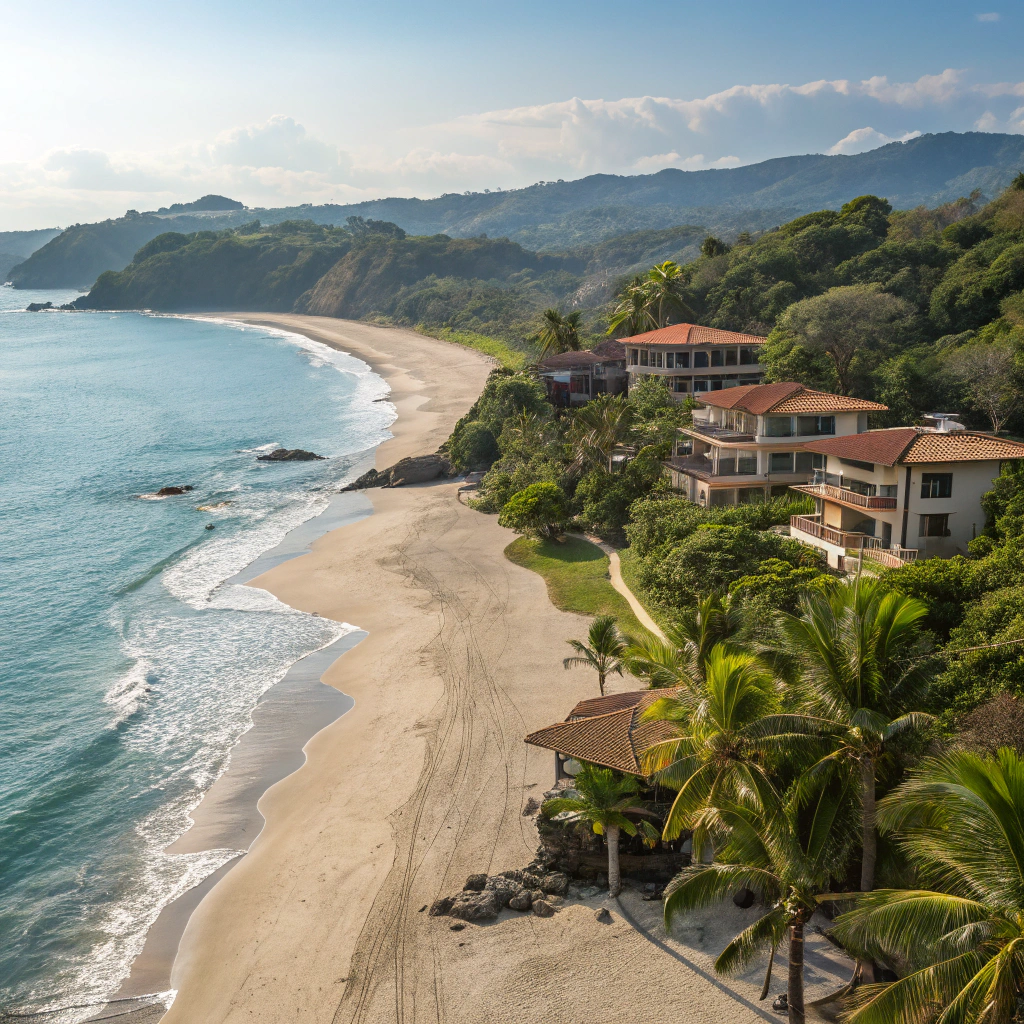
A Deep Dive into Maritime Zone Concessions in Costa Rica: Risks and Opportunities
Introduction
Costa Rica has become a top destination for real estate investment in Latin America. Its natural beauty, political stability, and high quality of life attract foreign buyers looking for beachfront homes, tourism developments, or secure, long-term asset diversification. Among the different types of land available, maritime zone concessions often generate both strong interest and considerable confusion.
These properties are especially appealing due to their prime coastal locations, often just steps from the beach. However, unlike private fee simple land ownership, maritime concessions come with a unique legal framework. Rather than full ownership, buyers acquire a temporary right to use the land, subject to state oversight, regulatory compliance, and renewal terms.
The Maritime Zone (Zona Marítimo Terrestre, ZMT) is a 200-meter-wide strip of land measured from the high-tide line. While the first 50 meters belong entirely to the State and are off-limits to development, the remaining 150 meters can be leased under concession, primarily for residential, commercial, or tourism purposes.
For those considering purchasing land in this zone, it’s essential to understand the legal, environmental, and financial implications. This article offers a detailed guide to the realities of investing in maritime concessions in Costa Rica. We’ll break down the legal structure, highlight the risks and common pitfalls, outline the required steps for a successful purchase, and analyze the latest market trends. Whether you’re dreaming of building a beachfront villa or launching a coastal eco-resort, this guide will help you make a well-informed decision rooted in local legal realities.
1. What Is a Maritime Zone Concession in Costa Rica?
In Costa Rica, the Maritime Zone (Zona Marítimo Terrestre) is a protected strip of land extending 200 meters inland from the high-tide mark. This area is divided into two parts:
The first 50 meters from the shore are public domain — inalienable, unbuildable, and owned outright by the State.
The remaining 150 meters may be granted under temporary concession to individuals or legal entities for specific uses.
These concessions do not constitute full property ownership. Instead, they grant the right to occupy and use the land for a specific purpose, usually for up to 20 years, renewable upon compliance with regulations and payment of concession fees.
To legally obtain a concession, the land must fall under an approved Coastal Zoning Plan (Plan Regulador Costero). This local planning document defines permitted land uses, construction limits, density guidelines, and environmental protection zones. Without such a plan in place, no legal concession can be issued, effectively freezing development in some coastal areas.
Foreign investors should also understand that Costa Rican law restricts foreign ownership in these zones. Non-Costa Rican individuals or entities may not own more than 49% of a concession. The majority stake must be held by Costa Rican citizens or locally established entities that meet specific legal criteria.
Concessions are overseen by municipal governments and the Costa Rican Tourism Institute (ICT), which jointly manage the application, monitoring, and enforcement of zoning regulations. All developments must also comply with environmental laws, including mandatory environmental impact assessments.
Finally, concessions are subject to annual fees, which are calculated based on land value and intended use. Failure to pay these fees or comply with use restrictions may result in penalties or termination of the concession.
In essence, while maritime concessions offer access to prime beachfront locations, they come with significant legal complexity. Any investor considering such a purchase must understand these fundamentals and seek qualified legal guidance to ensure compliance and protect their investment.
2. Advantages and Opportunities of Maritime Concession Land
Despite their regulatory complexities, maritime zone concessions present unique opportunities for well-prepared investors. The most compelling benefit is their exceptional location. Many concession properties are situated on Costa Rica’s most desirable coastlines — white-sand beaches in areas like Tamarindo, Nosara, Santa Teresa, Puerto Viejo, and Playa Flamingo.
These lots are typically less expensive than adjacent fee simple titled properties, offering a lower barrier to entry for those dreaming of owning land close to the sea. This price advantage makes them highly attractive for those looking to develop vacation rentals, boutique hotels, eco-lodges, or second homes.
Moreover, the concession framework aligns with Costa Rica’s broader push toward sustainable development. Projects on concession land must comply with zoning and environmental standards, making them ideal for eco-conscious development. Investors who embrace these guidelines often attract a higher-end international clientele seeking green tourism options and sustainable lifestyle solutions.
Additionally, concession holders enjoy certain tax and financial benefits. Annual concession fees are generally lower than standard property taxes, and the administrative costs related to transferring a concession — such as through the sale of a holding company — can be more efficient than a direct land transfer.
There’s also long-term capital appreciation potential. As Costa Rica continues to invest in coastal infrastructure — including roads, water systems, fiber optics, and renewable energy — previously remote areas are becoming more accessible and desirable. When zoning plans are finally approved or expanded in high-demand regions, concession land prices often rise dramatically.
Another overlooked advantage is the flexibility in ownership structure. While foreign ownership is limited to 49%, creative yet legal structures involving Costa Rican partners or dual shareholders allow foreign investors to participate while respecting the law.
Ultimately, maritime concessions represent an alternative investment strategy that balances high-value location with lower upfront costs — particularly suited for developers, expatriates, and eco-entrepreneurs who can navigate the framework.
For those with a long-term vision, sustainable mindset, and the right guidance, concession land along Costa Rica’s coastlines can yield impressive returns and lifestyle benefits alike.
3. Legal Risks and Common Mistakes to Avoid
Investing in maritime concession land can be highly rewarding — but only if done correctly. Many foreign buyers underestimate the legal risks, often due to unfamiliarity with local laws or misleading information from unlicensed sellers.
One major pitfall is purchasing land without verifying its legal status. Some sellers offer parcels they claim are under concession, but in reality, the area may not be covered by an approved zoning plan, or the concession may have expired or been revoked. Developing such land without legal rights can result in fines, demolition orders, or legal action.
Another common issue is illegal occupancy. In certain cases, concession land may be informally occupied by individuals or squatters. Evicting them can be lengthy and complicated. It is essential to conduct due diligence with a qualified Costa Rican real estate attorney who can review municipal records, zoning plans, and the national registry.
Foreign ownership rules also create complications. To comply with the 49% rule, some investors attempt to circumvent the law through nominee shareholders or dummy corporations, which may later be deemed illegal. These structures are risky, especially if challenged in court.
Furthermore, annual concession fees must be paid regularly, and failure to do so may lead to cancellation of the concession. Likewise, any unauthorized construction or environmental violations can result in significant penalties or even criminal charges under Costa Rican law.
Another risk lies in underestimating the timeframes involved. Transferring a concession, or applying for a new one, requires municipal approvals and ICT involvement — processes that can take several months to over a year.
Given these risks, the best strategy is to work with reputable professionals from the outset. A trustworthy law firm, a local notary, and a real estate agency familiar with the maritime zone process are essential. For example, a company like Crespo Agency, which has extensive experience in concession-based properties, can help guide clients through complex regulations while identifying solid investment opportunities.
In conclusion, maritime concessions require serious legal discipline and a long-term mindset. By avoiding shortcuts, conducting due diligence, and respecting environmental and ownership regulations, investors can safeguard their capital and build a secure, beachfront future in Costa Rica.
4. Key Steps to Legally Acquire Maritime Concession Land
Purchasing concession land in Costa Rica is not the same as buying titled property. The process involves multiple legal layers, government approvals, and strict compliance with zoning and environmental regulations. Below are the essential steps for a successful and legal acquisition.
1. Preliminary Research
Start by identifying a property that is within an active zoning plan and has a valid concession in place. The land must appear in the Plan Regulador Costero approved by the local municipality and the ICT. If the plan isn’t approved, no concession can be granted or transferred.
2. Legal Due Diligence
Hire a qualified real estate attorney to investigate the concession’s status, ownership structure, expiration date, any existing liens, and municipal tax payments. Also, verify if the property is occupied or encumbered.
3. Ownership Structure
Since foreigners can own only 49% of a concession, consider forming a Costa Rican corporation with a local partner or trusted shareholder. Ensure the entity complies with all nationality requirements under Costa Rican law.
4. Negotiation and Transfer Agreement
Once due diligence is complete, you’ll negotiate a concession transfer contract. Often, this involves purchasing the shares of a company that holds the concession, rather than the land itself. This type of structure is common and legal in Costa Rica.
5. Municipal and ICT Approval
The concession transfer must be submitted to and approved by both the local municipality and the ICT. Approval often requires a development proposal, architectural plans, and an environmental impact study. This stage may take several months.
6. Finalization and Notarization
Once approved, the transfer is formalized by a Costa Rican notary. At this stage, the buyer assumes responsibility for annual concession payments and compliance with development conditions.
7. Ongoing Compliance
After acquiring the concession, the new holder must stay up to date with annual payments, construction guidelines, and environmental regulations. Noncompliance could result in suspension or cancellation of the concession.
Following this structured process — although slower than conventional purchases — helps ensure legal security and regulatory approval. Working with professionals who understand this process can significantly streamline your investment and reduce the likelihood of errors or delays.
5. Market Trends and the Future of Coastal Concessions in Costa Rica
As Costa Rica continues to balance environmental protection with economic growth, maritime zone concessions are becoming increasingly relevant to national land use strategy. The interplay between eco-conscious tourism, coastal development, and investor interest has led to several market shifts worth noting.
One significant trend is the rising demand for eco-friendly development. Costa Rica’s reputation as a green, sustainable country attracts investors seeking to build resorts, homes, and retreats that align with low-impact, nature-integrated design. Maritime concessions, governed by zoning plans, are fertile ground for such projects — especially in areas where full title land is scarce or unaffordable.
Another key shift is the evolving profile of buyers. While U.S. retirees still represent a major market segment, there’s growing interest from digital nomads, tech entrepreneurs, and wellness-focused expats. These demographics often seek beachfront locations that offer high quality of life, stable internet, and community infrastructure.
Infrastructure development is also transforming once-remote areas into high-potential hotspots. New roads, airports, fiber-optic installations, and water systems are expanding access to regions like the Osa Peninsula, Nicoya, and the Caribbean Coast. As accessibility improves, property values and demand for concession land are rising accordingly.
Furthermore, digitalization of government processes is bringing more transparency and accountability to concession procedures. Municipalities and national agencies now publish zoning data, offer online services, and streamline permit tracking, helping to reduce the risk of corruption or administrative error.
Over time, as more coastal zoning plans are finalized, we can expect greater legal clarity and predictability, encouraging new investment in sustainable tourism and housing. Investors who enter the market early — especially in emerging coastal areas — stand to benefit the most from future appreciation.
In the context of climate change and global real estate scarcity, owning a well-managed maritime concession in Costa Rica could become an increasingly valuable asset. The key is to invest responsibly, transparently, and in alignment with the country’s development goals.
Conclusion
Maritime concessions in Costa Rica offer an exciting yet complex opportunity for investors seeking to own land near the country’s stunning coastlines. While not a traditional property purchase, concessions grant access to prime beachfront locations — at lower costs — under a framework designed to protect the environment and promote sustainable development.
Understanding the legal requirements, ownership limitations, and approval processes is essential. With proper due diligence and guidance, the risks associated with concession land can be significantly mitigated, allowing buyers to tap into one of Latin America’s most dynamic real estate markets.
As Costa Rica continues to enhance its infrastructure, refine its zoning policies, and attract eco-conscious tourism, demand for legal, sustainable concession properties is poised to grow. Whether for a personal residence, boutique hotel, or long-term investment, maritime concessions provide a viable alternative to titled land for those willing to follow the rules.
Above all, success lies in preparation, legal compliance, and working with experienced professionals. Done right, a maritime concession is more than a legal agreement — it’s a gateway to a lifestyle and an asset that appreciates over time, surrounded by the natural beauty that defines Costa Rica.


Join The Discussion